Guide · 11/11/2026 · 6 min read
Precious Metals and Inflation: What History Shows

The link between precious metals and inflation is one of the most common arguments for buying gold: when money loses purchasing power, a tangible asset should make up the difference. The historical record is messier than the slogan. Long data series say something surprisingly good about gold — and at the same time something that sales pitches usually leave out.
Below we look at what fifty years of statistics, the 1970s, and the 1980 peak actually show about inflation protection.
What “inflation hedge” actually means
The term is imprecise, because it is used for two entirely different things.
- Preserving purchasing power over the long run — whether an asset at least keeps pace with rising prices over decades.
- Reacting in the short run — whether the price rises in precisely those months and years when inflation accelerates.
These are not the same question, and history answers them differently. Gold is clearly stronger on the first than on the second.
The long view: the past fifty years
According to the World Gold Council, gold’s average annual return over the past 50 years has been roughly 11% in US dollars, which has outpaced both the US and world consumer price indices since 1971. Over long horizons, then, the gold price has not merely preserved purchasing power but increased it.
It matters why the count starts in 1971. That was the year the United States ended the dollar’s convertibility into gold and the Bretton Woods system collapsed. Before that, the gold price was fixed — 35 dollars an ounce — and any “return” was an administrative decision rather than a market price. Every long gold series begins at that break point, and the choice shapes the result more than is usually acknowledged.
The same source shows a pattern that depends on the level of inflation: in years when inflation exceeded 3%, the gold price rose by an average of 14% a year, and the effect was larger the faster prices were rising. In years of moderate inflation the relationship is considerably weaker.
The 1970s: the decade that created the myth
Gold’s reputation as an inflation hedge comes almost entirely from a single decade. After 1971 the price floated, two oil shocks followed, and US inflation reached double digits by the end of the decade. Gold moved from 35 dollars an ounce to roughly 850 dollars in January 1980.
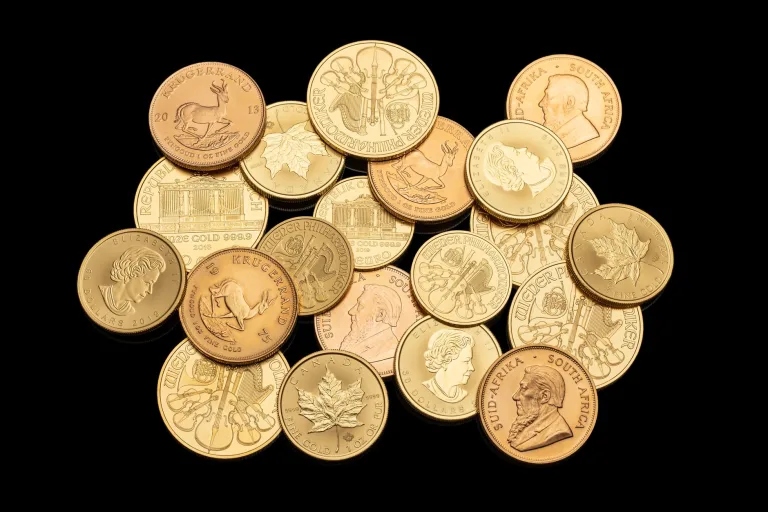
That period also produced the modern bullion coin. South Africa’s Krugerrand gold coin was the first mass-produced one-ounce standard, and through the 1970s it dominated the Western retail market almost completely. Much of how we buy physical gold today — the ounce as the unit, the coin as a standardised product — is an inheritance from that decade.
But one decade is not statistical proof. It is a single observation that coincided with an extraordinary change in the monetary system.
The 1980 peak: why your entry price matters
The most sobering figure in this article is the following. An investor who bought gold at the peak in the third quarter of 1980 earned an average annual return over the following decades of roughly 2.6–3.8%, while the consumer price index rose 2.9% a year. In other words, a buyer who entered at the worst possible moment saw a real return close to zero — and had to wait a very long time for even that.
The January 1980 peak remained the inflation-adjusted record for decades. In nominal terms gold set a new high in January 2026, reaching 5,589 dollars an ounce according to Kitco. On 10 November 2026 the spot price was around 4,075 dollars by the same source — about 27% below the peak. Even an asset considered an inflation hedge moves tens of percent in both directions.
Silver’s story is different
Silver carries a historical warning of its own. In January 1980 the silver price rose to about 50 dollars an ounce on the back of the Hunt brothers’ speculation. On 27 March 1980 — “Silver Thursday” — came the largest single-day fall in silver’s history, and the price stayed depressed for the next twenty years.
The reason is structural: silver is both an investment metal and an industrial raw material, so the silver price responds to the business cycle as well as to monetary policy. In practice that has made silver considerably more volatile than gold. For a buyer in Estonia there is also a tax difference: investment gold is exempt from VAT, while silver — for example the Austrian Philharmonic silver coin — carries 24% VAT, which has to be built into the starting price of the position.
What the research actually says
It is worth being honest here: the academic literature does not confirm the simple claim that gold tracks inflation. The World Gold Council’s own review points to work by Lucey, Sharma and Vigne (2016) finding gold’s relationship with the consumer price index to be inconsistent and time-varying, and statistically insignificant overall since 1971. A 2015 study by Aye, Chang and Gupta, using US data from 1833 to 2013, found an interrupted long-run relationship between gold and inflation — present in some periods and absent in others.
The Council itself argues against a purely CPI-based explanation and offers an alternative: growth in the money supply (M2) explains the gold price better than the consumer price index does. By its own assessment, too, gold’s short-term behaviour relative to inflation is less convincing than its long-term record.
What this means for an investor in Estonia
Estonia’s consumer price index rose 4.2% year on year in October 2026, with goods 5% and services 3.2% more expensive than a year earlier. In that situation, the historical record supports three practical conclusions.
First, the time horizon decides everything. The data support gold on a scale of decades, not months. If the money is needed in two years, a 50-year average says nothing useful.
Second, the entry price is a real risk. The 1980 example is not a curiosity; it is the base case for anyone buying near a peak. That is precisely why many buyers prefer to accumulate gradually rather than make one large purchase.
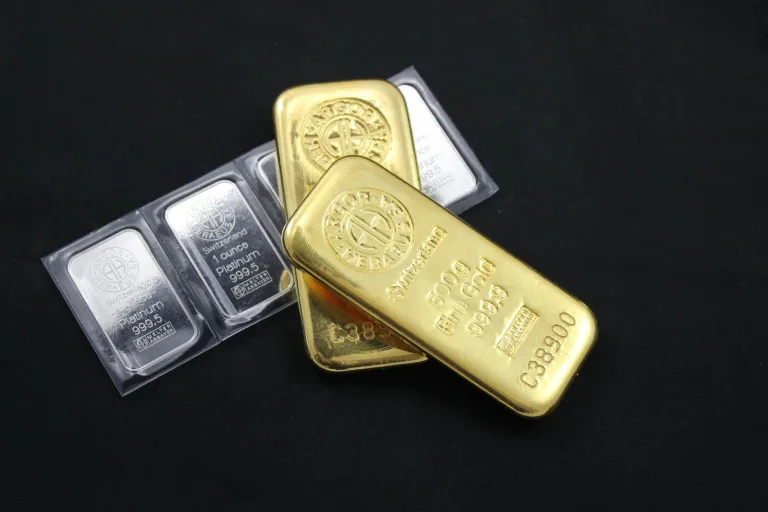
Third, a euro-based investor has two moving parts. The international price is set in dollars, but your purchasing power is in euros — the EUR/USD rate can either amplify or mute the metal’s move. The choice of weight then affects the premium: larger units, such as an Argor-Heraeus gold bar, usually carry a smaller mark-up per gram than small coins do.
Frequently asked questions
Does gold protect against inflation?
Over long horizons gold has outpaced the consumer price index, but year to year the relationship is weak and inconsistent. The more accurate statement is that gold has preserved purchasing power across decades, not that it tracks inflation.
Is silver a better inflation hedge?
Silver has been more volatile and also depends on industrial demand. In Estonia it additionally carries 24% VAT, which raises the entry threshold compared with investment gold.
Does today’s 4.2% inflation mean the gold price will rise?
That does not follow. Historical averages describe many years at once, not the outcome of any single one, and the gold price depends at the same time on interest rates, the dollar, and central bank buying.
This article is for informational purposes only and does not constitute investment advice or a solicitation to buy or sell precious metals. Precious metal prices fluctuate. Before making any investment decision, consider your own circumstances and consult a specialist if necessary.
Goldman & Sons editorial team