
Guide · 12/08/2026 · 6 min read
Selling Gold in Estonia: Process and a Fair Price
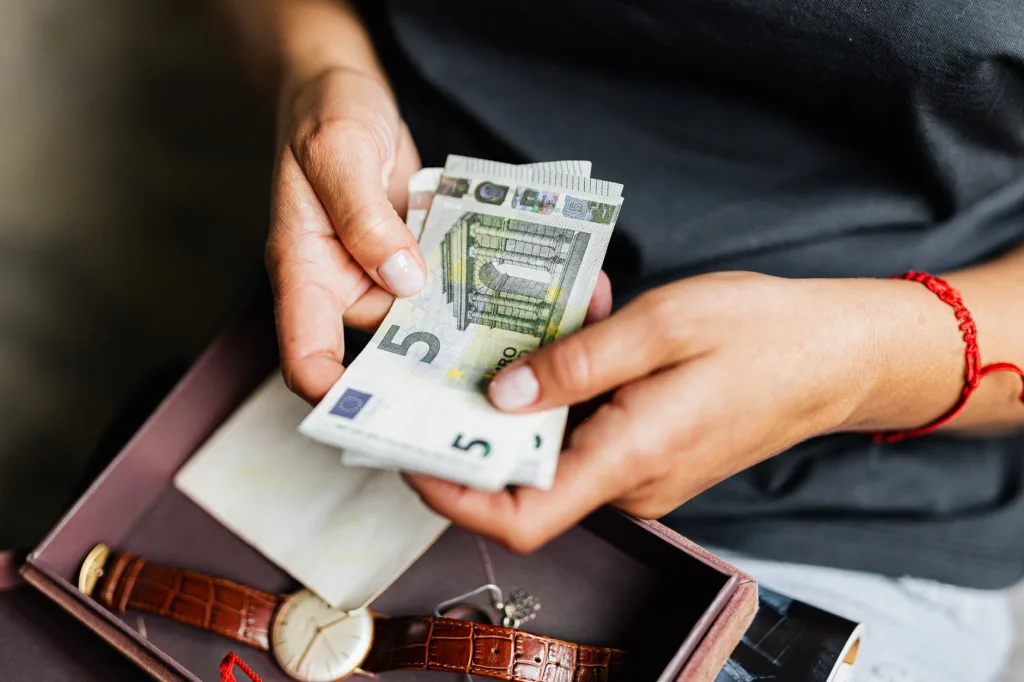
Plenty gets written about buying gold and far less about selling it. Yet every investment eventually reaches the point where coins or a bar need to turn back into cash — for a house purchase, to rebalance a portfolio, or simply because the money is needed elsewhere. This guide walks through how selling gold in Estonia actually works, how a fair price is built, and what is worth knowing before you sit down at the counter.
First: what exactly do you have?
Before asking for a quote, take stock and write down three things: metal and purity, weight and form. Investment gold coins (Maple Leaf, Philharmonic, Krugerrand and the like) and bars from a recognised refiner are one category; jewellery, dental gold and pieces of unclear origin are quite another, since those are typically bought on pure metal content and at a lower price.
If you still have the original packaging, certificate or assay card plus the purchase receipt, bring them along. A bar in unbroken packaging or a coin in its factory capsule is quicker for the buyer to verify, and that often shows up in the price offered. With a serial-numbered bar, breaking the packaging is almost always a step that costs you money.
How a fair price is built
The selling price of physical gold has two parts: the market price of the metal and the premium or discount attached to the specific piece.
The market price starts from the international spot price and, alongside it, the LBMA Gold Price — an independent benchmark administered by ICE Benchmark Administration, with 15 direct participants contributing to price formation, among them major banks such as JPMorgan Chase, HSBC and Citibank. This is the price the industry widely uses for valuation and as the basis for transactions, which makes it a sensible reference point for a private seller wanting to check whether the number quoted is in a reasonable range.
The second part is the gap between the buying and selling price, or spread. A dealer always buys somewhat below and sells somewhat above the market price; that gap covers verification, handling, insurance, inventory and business risk. In practice it means the same day’s buy price and sell price are never equal — and that is not a clever trick, it is simply how a physical goods business is built. As a rule, widely traded investment products such as one-ounce coins and larger bars carry a narrower spread than rare, very small, or hard-to-verify pieces.
If you want a feel for which products have the clearest price structure on the market, look at the 1 oz Canadian Maple Leaf gold coin, the 1 oz Austrian Philharmonic gold coin or the 100 g Argor-Heraeus gold bar — internationally recognised products whose pricing is easiest to compare.
Where to sell gold in Estonia
A private seller has essentially three routes.
A precious metals dealer or buy-back counter. The fastest and simplest option: the price is quoted on the spot and the deal is done the same day. Many dealers work as a two-way market: the same place that sells also buys back. We buy investment silver back over the counter in our shop; we do not buy back gold.
Auction or a broker. For coins with collector value an auction may deliver a better result, but it takes time, adds a commission, and the final price is not known in advance.
Directly to another private individual. In theory you keep the spread; in practice you take on counterfeit risk, payment and meeting risk, and the buyer faces the question of whether to trust your piece at all. If you do go this route, it is worth completing the transaction with professional verification present.
Paperwork and identification
Buying up precious metals is a regulated activity in Estonia. The Financial Intelligence Unit states that a company must hold an operating licence to buy up or wholesale precious metals and precious metal products, and must follow the internal procedure rules and control requirements set out in the Money Laundering and Terrorist Financing Prevention Act.
For the seller this simply means: bring a valid identity document — an ID card or passport. Identification is not distrust, it is a legal obligation, and any proper dealer will carry it out regardless. If someone offers a “no paperwork” deal, treat it as a signal to walk away.
Is the sale of gold subject to income tax?
This is the most frequently asked and most frequently misunderstood part.
When you buy, investment gold benefits from the EU VAT exemption — but that is value added tax, not income tax, and it does not mean any gain on sale is automatically tax-free.
On a transfer of property it is the gain that is taxed, not the full sale sum. According to guidance from the Estonian Tax and Customs Board, the gain is calculated by deducting the acquisition cost and documented costs directly related to the sale from the sale price; for income received from 2025 onwards the income tax rate is 22%. A resident individual declares the gain on income tax return form A, which must be filed by 30 April of the year following the year the income was received.
The Tax and Customs Board also explains that income from selling movable property that has been in personal use — worn clothing or your own old furniture, for example — is not taxed. Gold acquired for investment purposes is not, in the ordinary sense, an item in personal use, so a gain on its transfer is generally taxable. That makes keeping the purchase receipt a directly financial matter: without a documented acquisition cost, reducing the taxable gain is difficult. For your specific situation, the Tax and Customs Board or a tax adviser can give a binding answer.
When does the market actually sell?
A useful piece of context: a high price does not automatically mean everyone is selling. According to World Gold Council data, total gold supply in the second quarter of 2026 was unchanged at 1,269 tonnes: mine production rose 2% to 966 tonnes — an all-time Q2 high in a data series going back to 2000 — while recycled gold volumes fell 6% to 326 tonnes. The WGC attributes the restrained selling-back to expectations of further price gains, limited near-market stocks and the absence of broader economic distress.
In other words: the decision to sell is an individual one, driven by your own needs and time horizon rather than by the mood of the market.
Frequently asked questions
How quickly do I get the money? At a dealer the transaction is usually completed the same day, once the piece has been verified and the price agreed.
Do I have to sell the whole holding at once? No. That is precisely why many investors prefer several smaller units over one large bar — you can sell exactly as much as you need.
Will a coin without its original packaging still be bought? Generally yes, but verification takes longer and the price may be slightly lower than for a piece in unbroken packaging.
Is jewellery priced the same as investment gold? No. Jewellery is usually bought on pure metal content and at a lower price than recognised investment products.
This article is for informational purposes only and does not constitute investment advice or a solicitation to buy or sell precious metals. Precious metal prices fluctuate. Before making any investment decision, consider your own circumstances and consult a specialist if necessary.
Goldman & Sons editorial team