
Guide · 29/07/2026 · 6 min read
How to Verify a Gold Coin or Bar Is Genuine
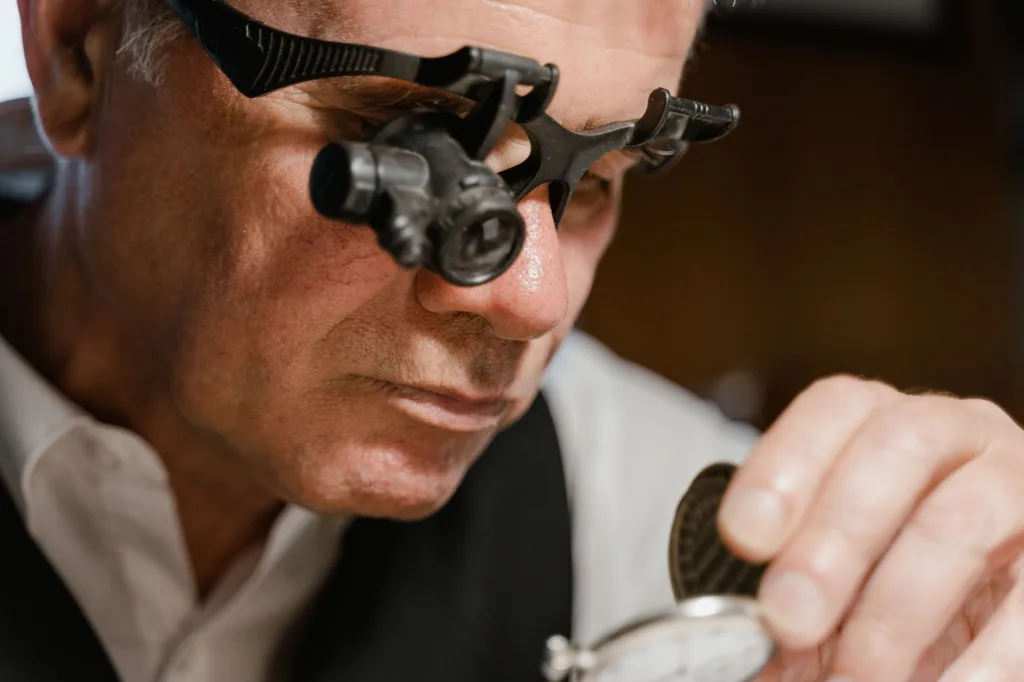
The biggest worry with physical gold usually isn’t the price — it’s the question of whether the coin or bar in your hand is real. The good news is that for most buyers the question is settled at the moment of purchase: investment gold bought from a proper dealer almost never ends up in doubt. The bad news is that counterfeits have become technically much better, and simply eyeballing a piece is no longer enough.
This article walks through where counterfeits come from, which checks you can do yourself, where home testing runs out of road, and what the professionals actually do.
How big is the counterfeiting problem?
Counterfeiting isn’t a niche precious-metals issue — it’s part of a far larger black market. According to an LBMA Alchemist review, counterfeiting is now the world’s most lucrative form of illicit trade, with estimated annual revenues nearing $1 trillion, and counterfeit goods made up roughly 3.3% of global trade in 2023 — a figure projected to reach 5% by 2030.
On the precious-metals side, the best-known case dates from 2019, when more than 1,000 counterfeit gold bars worth over $50 million were discovered. The bars carried forged refinery stamps and matched specifications so closely — they tested at 99.98% purity — that they circulated through the supply chain undetected. The crucial detail: what had been faked was not the metal, but the provenance and the brand.
The LBMA lists a varied toolkit of counterfeiting tactics: plating base metal with gold, manipulating alloys, using dense-core metals so the weight stays right while the gold content drops, 3D printing to produce dimensionally accurate moulds, and forging assay cards and tamper-evident seals.
Where you buy is your strongest protection
No home test substitutes for the source of your purchase. An established dealer sources from accredited refineries and wholesalers, checks incoming stock, and stands behind what it sells. A bar bought from a private seller, a classifieds site, or picked up “cheaply” while travelling is a completely different risk class — and that is precisely where counterfeits tend to surface.
A practical rule: if the price is noticeably below the market, that isn’t a bargain, it’s a warning sign. Investment gold trades at the world market price and is always sold at a modest premium over spot, never at a discount.
Weight and dimensions: simple, but effective
Gold is an exceptionally dense metal — roughly 19.3 grams per cubic centimetre, considerably denser than lead, copper or nickel. That makes an authentic gold coin very hard to fake in a way that gets both the weight and the dimensions right at the same time.
Every standard bullion coin has a precisely fixed weight, diameter and thickness. A 1 oz Canadian Maple Leaf gold coin and a 1 oz American Eagle gold coin, for instance, both contain one ounce of pure gold — but the Eagle is a 22-carat alloy and is therefore heavier and thicker than the 24-carat Maple Leaf. If a seller has a “slightly different” version of a given coin, that is something you can check on the spot.
You’ll need an accurate scale (to 0.01 g) and a caliper. If the weight is right but the piece is too thick, you’re dealing with a lower-density metal. If the dimensions match but the weight falls short, the same conclusion applies.
Packaging, serial numbers and security features
Bars today are usually sold in sealed blister packaging with an assay card showing the serial number, mass, fineness and manufacturer’s mark. A 100 g Argor-Heraeus gold bar is the classic example: the number on the card must match the number stamped into the bar, and the packaging must be intact.
Some manufacturers add a security feature of their own. The Argor-Heraeus Kinebar gold bar carries a holographic pattern on its reverse that shifts with the viewing angle — something extremely difficult to reproduce under ordinary conditions.
One important caution: don’t open a bar’s original packaging without a reason. Intact packaging is part of the bar’s value and makes it easier to sell later; an opened bar generally has to be re-tested.
Home tests and their honest limits
The common quick checks are the magnet test (gold is not magnetic, so a “gold coin” that sticks to a strong magnet is definitively fake), measuring density by weighing the piece in water, and the ping test, where a genuine coin produces a long, clear ring.
These tests reliably catch only the crude fakes. A tungsten-cored bar, with a density very close to that of gold, will pass both the magnet and the density check. This is exactly why the LBMA stresses that traditional methods on their own do not detect every counterfeit, and that no single method offers complete certainty. A home test is a filter, not proof.
Professional methods
Serious verification uses non-destructive instruments. X-ray fluorescence (XRF) identifies the metals present, but reads mainly the surface layer — so it may not expose a gold-plated fake. Ultrasound measures the speed of sound through the whole object and therefore picks up a foreign core. Electrical conductivity testing detects extraneous metal in the alloy. In practice several methods are combined, because any one of them on its own leaves a gap.
Digital traceability is changing the picture
Longer term, the market is moving toward a world where the buyer doesn’t have to prove a bar’s authenticity — the proof travels with the bar. The LBMA and the World Gold Council’s Gold Bar Integrity programme are building a distributed-ledger database that consolidates data on a bar’s origin and movement. In the LBMA’s description, a physical security feature acts as a “bar passport” that establishes the bar’s identity and provenance and links it to the serial number, assay data, brand and production date held in the database. The goal is for every bar to eventually have a digital twin.
Authenticity and VAT exemption are two different things
It’s worth knowing that the EU’s definition of investment gold is a tax criterion, not an authenticity test. Under the EUR-Lex summary, a bar must be of a purity of at least 995 thousandths and a coin at least 900 thousandths, minted after 1800, be or have been legal tender in its country of origin, and normally sell at a price no more than 80% above the open market value of the gold it contains. Member States publish an annual list of coins meeting those conditions. Appearing on that list tells you no VAT is added to the sale — not that the particular specimen in your hand is genuine.
What to do if you have doubts
If a doubt has already taken hold, don’t start cutting, drilling or applying acid to the piece yourself — you’ll destroy its value even if the coin turns out to be genuine. The sensible order is: weigh and measure it, examine the packaging and serial number, then take it to a dealer with professional testing equipment. Our shop checks incoming stock as a matter of course, so physical gold can be verified even if it was bought elsewhere.
Frequently asked questions
Is the magnet test enough? No. It rules out only the crudest fakes, because while gold itself isn’t magnetic, neither are many of the metals used to counterfeit it.
Is a bar in sealed packaging guaranteed genuine? No — the 2019 case showed that stamps and accompanying documents can be forged too. Packaging reduces the risk; a trustworthy point of purchase reduces it far more.
Are coins or bars the safer choice? Both have their own safeguards: coins have standardised dimensions and widely recognised designs, bars have serial numbers and assay cards. The real difference lies in premium and divisibility rather than authenticity risk.
This article is for informational purposes only and does not constitute investment advice or a solicitation to buy or sell precious metals. Precious metal prices fluctuate. Before making any investment decision, consider your own circumstances and consult a specialist if necessary.
Goldman & Sons editorial team