Market update · 16/11/2026 · 5 min read
Precious Metals Week: Gold Hits a 13-Month Low

Market review for the week of 9–13 November 2026.
Last week’s rally faded as quickly as it arrived. Gold was still trading at $4,148 on Monday, but Tuesday’s US inflation print and some hard-edged comments from Fed officials turned the market. On Thursday morning the gold price dropped to $3,852 — its lowest since October 2025 — and the week closed around $3,884, down 5%. According to Reuters, it was gold’s worst week since early June. Here are the stories that mattered and what they mean for a buyer in Estonia.
The week’s key news
- October inflation came in hot and made a December rate hike look all but certain. US consumer prices rose 0.4% in October (0.3% expected) and core prices 0.3% (0.2% expected) — the third straight month at 0.3%. Before the report, futures priced roughly an 84% chance of a 25-basis-point hike at the 8–9 December meeting; afterwards about 88%, plus a 12% chance of a 50-basis-point move. Gold fell more than 2% on Tuesday and silver more than 3%. Gold pays no interest, so every rise in rate expectations makes holding it relatively more expensive — that is the core mechanism behind this week’s decline. Kitco AM Report, 10.11.2026 · Kitco AM Report, 11.11.2026
- Fed officials opened the door to a half-point hike. Fed Governor Christopher Waller said in London on Tuesday that he leans toward supporting a 25-basis-point increase in December, but that if core inflation stays around 0.3% or higher, 50 basis points should be considered. Hiking only 25 basis points, he said, would put the Fed’s credibility at risk. Dallas Fed President Lorie Logan said at least two more 25-basis-point increases are needed and that it may be possible to move faster this winter. The Fed hiked in September and held in October. Kitco, 10.11.2026
- Treasury yields above 5% and a firmer dollar pushed gold to a 13-month low. The US 10-year Treasury yield climbed to about 5.10% by Thursday, and gold fell 2.8% on the day to $3,876, with silver down 3.1% to below $50. By Friday the dollar index was above 103 and the 10-year yield near 5.13%. Friday’s producer price report (0.3% month on month vs 0.4% expected) gave gold a brief breather, but annual producer inflation stood at 6.5% — the highest since November 2022. According to Reuters, the probability of a 25-basis-point hike slipped after the report from 96% to about 89%. Kitco PM Report, 12.11.2026 · Kitco AM Report, 13.11.2026 · Reuters/Kitco, 13.11.2026
- Central banks kept buying in October: China added 26 tonnes, Poland hit its 700-tonne target. According to World Gold Council analyst Krishan Gopaul, the People’s Bank of China added 26 tonnes in October, bringing its holdings to 2,435 tonnes — just 2 tonnes behind France. By his calculation, the National Bank of Poland bought 27 tonnes and reached its 700-tonne target; Governor Adam Glapiński said he sees no reason to stop buying. The Czech National Bank added 2.5 tonnes (90 tonnes in total, targeting 100) and Uzbekistan 7 tonnes. The WGC notes that central bank buying appears sensitive to price, but the relationship isn’t stable enough to imply a firm price floor. Kitco, 10.11.2026
- Tension with Iran kept oil high and inflation expectations elevated. Iranian security chief Mohsen Rezaei said on Tuesday that no formal negotiations with Washington are under way, and on Thursday President Trump indicated the US is no longer interested in a negotiated settlement. According to Kitco, 37 vessels were attacked in October, the highest monthly total since the conflict began. Brent rose 3.3% on Thursday to $95.82. This time geopolitics didn’t help gold: pricier oil means higher inflation and therefore a tougher Fed, which outweighed safe-haven demand. Kitco AM Report, 11.11.2026 · Kitco PM Report, 12.11.2026
What market participants expect
Sentiment in Kitco’s weekly survey cooled markedly from the week before. Of 13 Wall Street analysts, two (15%) expected gold to rise next week, ten (62%) expected a decline and three (23%) saw sideways trading. Of 160 retail votes, 42% expected gains and 38% losses — a week earlier, 68% had been bullish. Marc Chandler (Bannockburn Global Forex) noted that a break of the $3,750 area could open the way lower; StoneX’s Daniel Pavilonis warned that a very aggressive Fed could push gold further down. James Stanley (Forex.com), by contrast, expected another pop above $4,000, though he wasn’t sure it would hold. These are opinions and technical analysis, not forecasts to be taken as fact (Kitco, 13.11.2026).
This week’s price and what it means for an investor in Estonia
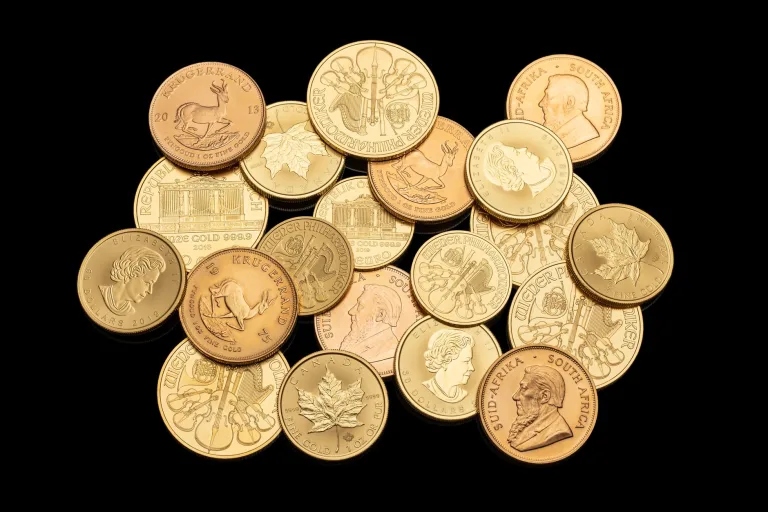
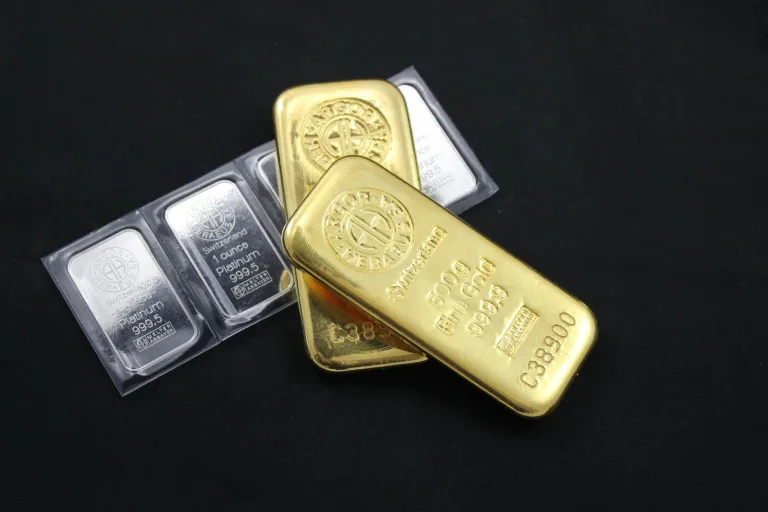
On the morning of Monday 16 November our prices for one-ounce gold coins were: Philharmonic €3,612 (earlier years) and €3,640 (2026), Maple Leaf €3,619, Kangaroo €3,687, Krugerrand €3,769 and American Eagle €3,765. A one-ounce silver coin cost €57.84–59.60 (the Philharmonic silver coin €57.84), and a 1 kg Valcambi silver bar €1,891. The silver price followed gold: on the world market, silver fell from above $52 an ounce to below $50 during the week. Based on Thursday evening prices, the gold-to-silver ratio was around 78.
What does this mean in practice? First: last week a one-ounce gold coin rose by almost €160 over the counter; this week gold fell in dollar terms by roughly the same percentage it gained the week before. In the short run, the direction of the price now depends almost entirely on what the market expects from the Fed in December, and that expectation can swing either way on a single data point. Second: central banks kept buying in October even as prices fell — that side of demand works on a completely different time horizon. Third: the price gap between different one-ounce coins is currently up to ~€160 (Philharmonic vs Krugerrand), but that is premium — the amount of gold is the same. Silver in Estonia still carries 24% VAT while investment gold is VAT-exempt; that gap doesn’t move with the market price.
What to watch next
The coming week has several Fed-related events on the calendar. Fed Chair Kevin Warsh speaks on Monday, US retail sales are out on Tuesday, and the minutes of the Fed’s October meeting are published on Wednesday, 18 November. Anything that shifts the odds between 25 and 50 basis points is likely to move metal prices as well. The second thread is Iran and oil: rising tension around the Strait of Hormuz supports inflation expectations and, through them, a tougher Fed. Euro-based investors should also keep an eye on the EUR/USD rate — a strong dollar can soften the decline of over-the-counter prices in euros.
This article is for informational purposes only and does not constitute investment advice or a solicitation to buy or sell precious metals. Precious metal prices fluctuate. Before making any investment decision, consider your own circumstances and consult a specialist if necessary.
Goldman & Sons editorial team