
Guide · 28/10/2026 · 7 min read
Gold Coin Certificates and Packaging: How to Read Them
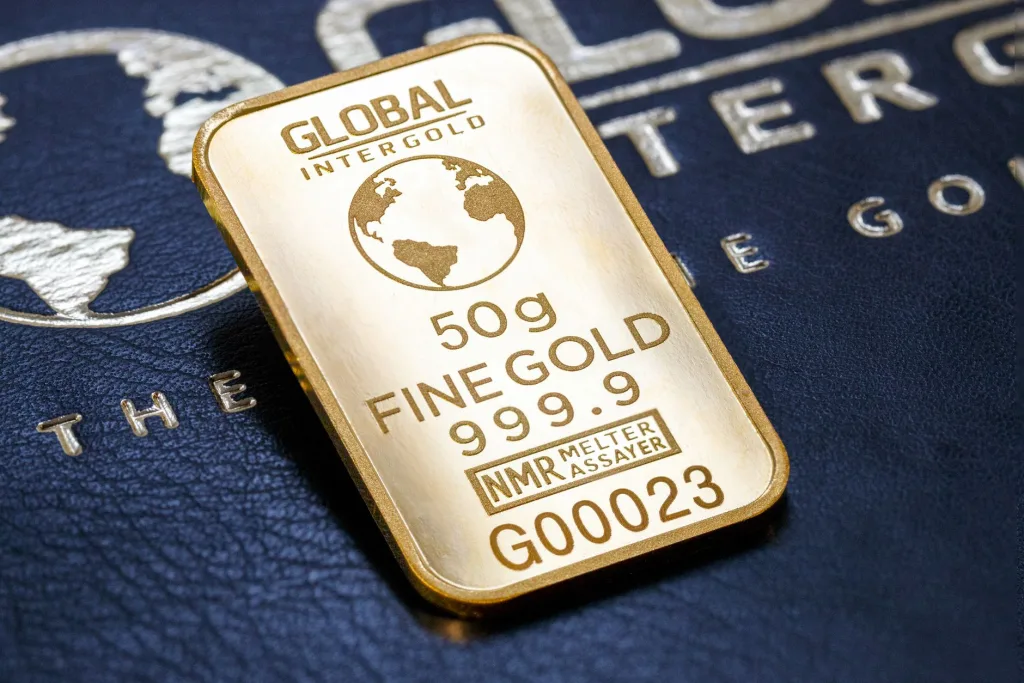
Every gold coin and bar arrives carrying information: markings struck into the metal, a serial number, often a certificate and sealed packaging. None of it is decoration — it is the first and cheapest layer of verification a buyer has. The trouble is that most buyers file the paperwork in a drawer and never look at it again, without knowing what those marks actually prove or where their limits lie.
Here is what a typical certificate and bar surface tell you, what security features modern bullion coins carry, and what you can reasonably conclude from them.
A certificate proves the maker’s claim, not the metal
Start with the distinction people get wrong most often. A certificate is the producer’s statement about what the producer made. It is not an independent assay of what happens to be in your hand right now.
Australia’s Perth Mint says so plainly in its buyer information: a numbered certificate of authenticity accompanies collector — that is, numismatic — coins, and its bullion coins do not include one. Cast bars are a different matter: a 1 kg cast gold bar, for example, comes with a certificate of assay bearing a matching serial number — Perth Mint.
So a coin without a certificate is not the weaker purchase. A bullion coin’s “certificate” is the coin itself: a sovereign face value, a standard weight and set of dimensions, and a mint design you can verify without looking at a single piece of paper.
What has to be marked on a gold bar
For bars there is a written standard. The LBMA (London Bullion Market Association) Good Delivery technical specifications, which govern the large cast bars and kilobars moving through the wholesale market, require four or five things on the bar’s surface: the refiner’s stamp, an assay mark, the fineness, a serial number, and the month and year of production in MMYY format — 0119 means January 2019. The serial number may not exceed 11 characters, and the characters used for fineness, date and serial number must be at least 12 mm tall. One telling detail: the marking must be applied by pressure stamping or dot-matrix punching, and laser engraving is not permitted — LBMA technical specifications.
The small minted bars from 1 g to 100 g that retail buyers see most often fall outside the Good Delivery standard, but follow the same logic: producer name, weight, fineness (usually 999.9) and serial number. An Argor-Heraeus gold bar, for instance, comes on a sealed card where the serial number pressed into the bar and the number printed on the card must match. That match is the first thing to look at.
Swiss refiner MKS PAMP describes its sealed CertiPAMP packaging in the same terms: the package carries an individual serial number, a barcode and the signature of a sworn assayer certifying the bar’s fineness, weight and serial number — MKS PAMP.
Coin security features: what to look for under magnification
A bullion coin comes not with a certificate but with security features on the coin’s own surface. The clearest example is the Canadian Gold Maple Leaf. According to the Royal Canadian Mint, 1 oz Gold Maple Leaf coins from the 2020 issues onward carry three anti-counterfeiting features:
- Radial lines in the coin’s field — machined into the master tooling to within microns, with a line width and pitch that diffract light in a distinctive way and repeat identically from die to die.
- A micro-engraved maple leaf on the reverse — a laser-engraved textured mark with the year of issue visible in its centre under magnification (“21” on a 2021 coin).
- Bullion DNA — an encrypted image registered in the Mint’s database, against which a coin can be checked with a dedicated reader. Authentication works for coins dated 2014 and later.
Source: Royal Canadian Mint. For a coin, these features are the certificate: the verifiable evidence sits on the coin, not on paper.
Packaging: seals, blisters and the word “VOID”
The packaging carries information of its own. Minted bars usually come on a blister card built so that tampering shows: Perth Mint explains that if the blister has been prised open, the word “VOID” appears around its edge, and every card carries a serial number. Mint tubes are common for coins and small bars too — Perth Mint ships 1 oz minted silver bars without capsules, 20 to an acrylic tube closed with a tamper-evident security seal (Perth Mint). European mints use the same approach: the Philharmonic gold coin normally travels in a mint tube or an individual capsule, with no separate certificate.
The practical conclusion: an intact seal is a modest plus on resale, because it shortens the buyer’s checks. It is not what sets the price. What a gold coin or bar is worth depends on weight, fineness and where the gold price stands — not on the condition of the packaging. Opened packaging does not turn a coin into a fake, and an intact seal does not make a fake genuine.
When the markings and reality part ways
The limits of markings were laid bare by a case that came to light in 2019. According to a Reuters investigation (reported by Mining.com), all four of Switzerland’s largest gold refineries identified, over three years, at least $50 million worth of bars stamped with Swiss refinery logos that those refineries had not produced. Some turned up in JPMorgan Chase’s vaults, and one of the first clues was that the vault held at least two kilobars stamped with the same identification number. The gold in those bars was genuine and of high purity — only the markings were false. The giveaways were spelling errors, imprecise logos, and print that was either too deep or too shallow (Mining.com / Reuters).
This is why the LBMA stresses, in its Gold Bar Integrity programme, that any security feature sitting on the bar itself can in principle be duplicated — and why the market is moving toward database-based verification (LBMA). MKS PAMP’s VERISCAN works exactly that way: it scans the bar’s surface structure and reconciles it with production records, even through sealed packaging. The underlying AlpVision technology received LBMA security feature accreditation in March 2023 (MKS PAMP).
A practical checklist
- Numbers must match. The serial number pressed into the bar has to match the number on the certificate or card. A mismatch is a reason to stop the purchase, not a “minor discrepancy”.
- Weight and dimensions. Producers publish their tolerances. For Perth Mint’s 1 kg cast gold bar, the minimum weight is 1,000.010 g with maximum dimensions of 112 × 52 mm and a thickness up to 9 mm (Perth Mint). An accurate scale and a set of calipers are the cheapest checks available.
- Quality of the markings. Spelling errors, a blurred or misaligned logo, print of uneven depth — precisely what gave away the 2019 forgeries.
- The security feature under magnification. The micro-engraved mark, the radial lines, the pattern of the seal. A loupe costs a few euros.
- Integrity of the packaging. The word “VOID” along the blister edge, a torn seal, or an edge that has been re-glued.
- Where you buy. An identifiable dealer who will take the item back if needed and has the means to verify authenticity in-house is a stronger guarantee than any paperwork in the box.
Frequently asked questions
Is a gold coin without a certificate worth less? Generally no. Standard bullion coins are valued on weight and fineness, and many mints do not issue certificates for them at all. For a collector coin, where price depends on condition and mintage, a missing certificate can affect the value.
Does opening the packaging reduce the value? For a minted bar, an intact sealed card is an advantage on resale because the buyer’s checks go faster. That difference reflects convenience, not metal. For coins, the condition of the coin itself matters more.
What if the certificate has been lost? The markings and serial number on the bar remain, and database-based verification by the refiner does not require paper. Just expect a buyer to want to run their own weight and fineness checks when you sell.
This article is for informational purposes only and does not constitute investment advice or a solicitation to buy or sell precious metals. Precious metal prices fluctuate. Before making any investment decision, consider your own circumstances and consult a specialist if necessary.
Goldman & Sons editorial team