
Guide · 24/06/2026 · 5 min read
Which Gold Coins Are Best for Investment?
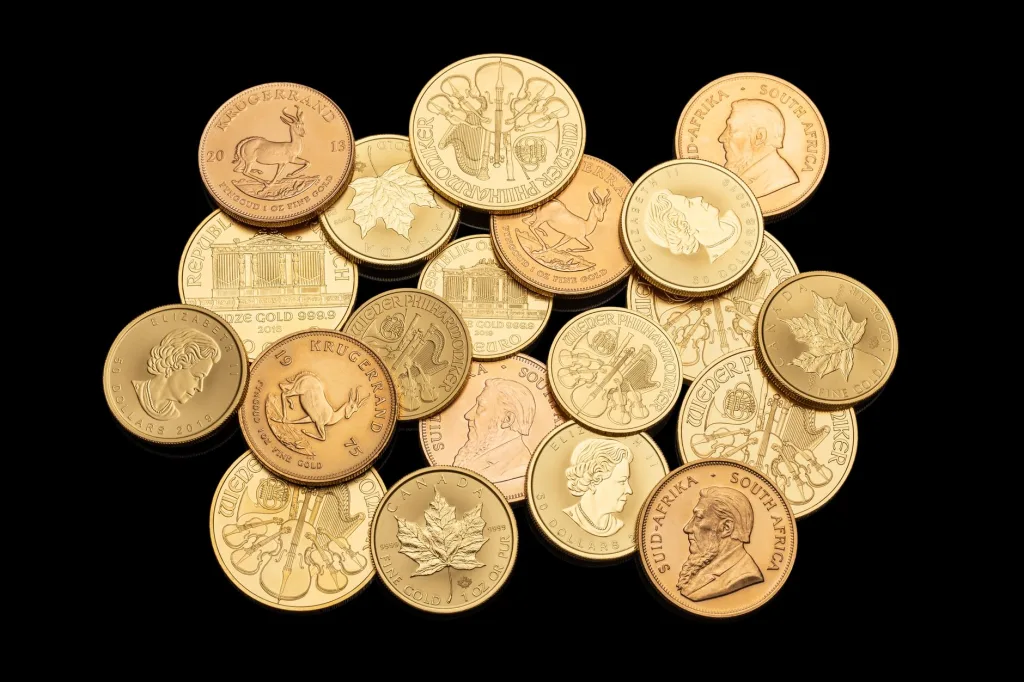
For many people a gold coin is the most tangible way to own precious metal: small, standardised and recognised the world over. But there are many coins, and a beginner soon asks the obvious question — which gold coins are actually best for investment? In this guide we look at how to compare coins and which classic investment coins have earned their place over the decades.
Why bullion coins, not collectible coins
Investment coins, or bullion coins, are coins whose value derives almost entirely from their gold content rather than from rarity or collector appeal. That is exactly what makes them transparent for investors: their price tracks the global gold price, and they are easy to both buy and sell. The price of collectible and commemorative coins, by contrast, is driven by mintage, condition and collector demand — far harder to predict.
Demand for investment gold has been strong of late. According to the World Gold Council, demand for gold bars and coins reached 474 tonnes in the first quarter of 2026 (+42% year on year) — the second-highest quarter on record. In Europe, bar and coin demand rose by as much as 50% (World Gold Council, Q1 2026).
How to choose an investment coin
Before turning to specific coins, it helps to know the four criteria that set a good investment coin apart:
- Recognition and liquidity. The more widely a coin is known around the world, the easier it is to sell later and the tighter the buy-sell spread.
- Premium over the gold price. A coin’s retail price is always slightly higher than the value of the pure gold it contains — that mark-up covers minting and resale. A smaller premium means you pay less above the “gold itself”.
- Purity. Modern investment coins are either 22-carat (916) or 24-carat (999.9). In both cases a 1-ounce coin, for example, contains exactly one ounce of pure gold — the difference lies only in the added alloy.
- VAT status. In the European Union investment gold is VAT-exempt when the coin meets certain conditions (more on that below).
The classic investment coins
Below are four internationally recognised investment coins regarded as the backbone of the market. All are highly liquid and available from us in one-ounce form.
Krugerrand (South Africa)
The Krugerrand is one of the oldest modern investment coins: proof versions were struck as early as 1967–1969, and mass production began in 1970. The coin is 22-carat (916 fineness) and contains a copper alloy that gives it its characteristic reddish hue and makes it hard-wearing (LBMA). Thanks to its long history, the Krugerrand is well known the world over.
Canadian Maple Leaf
The Royal Canadian Mint launched the Canadian Maple Leaf gold coin in 1979, and it was among the first 999.9-fineness (24-carat) investment coins, setting a new purity standard. With its high purity and instantly recognisable maple-leaf motif, the Maple Leaf is one of the most popular choices for those who prefer maximum gold content.
American Eagle
Like the Krugerrand, the American Eagle gold coin is 22-carat — the remainder is alloy for durability, yet a 1-ounce coin still contains exactly one ounce of pure gold. The Eagle is one of the most heavily traded coins on the US market and is well known elsewhere too.
Austrian Philharmonic and British Britannia
The Austrian Philharmonic is among Europe’s best-selling gold coins, 999.9 fineness and of euro-area origin. The British Britannia is also 24-carat and, for UK residents today, free of capital gains tax — for an international investor, what matters most is its high liquidity and recognition.
VAT: when a coin is exempt
In the European Union a gold coin counts as investment gold, and is therefore VAT-exempt, when it meets four conditions at once: a fineness of at least 900 thousandths, minted after 1800, being (or having been) legal tender in its country of origin, and being sold at a price that does not exceed the open-market value of its gold content by more than 80% (EUR-Lex, special scheme for gold). All of the coins named above meet these conditions. The European Commission also publishes an annual list of qualifying coins — the 2026 list applies for the whole year.
Larger or smaller coins?
One-ounce coins usually carry the lowest premium per gram, which makes them cost-efficient when investing a larger sum. Smaller coins (1/10, 1/4, 1/2 ounce) are more flexible — easier to sell off in parts and well suited to starting small — but their premium per gram is higher, because the minting cost is spread over a smaller amount of gold. The choice depends on your budget and on how flexible you want to be when selling later.
Frequently asked questions
Is a 22-carat coin a worse investment than a 24-carat one?
No. A 1-ounce 22-carat coin (e.g. a Krugerrand or Eagle) contains just as much pure gold as a 1-ounce 24-carat coin — it is simply slightly heavier because of the added alloy. Higher purity is a matter of taste and preference, not of value.
Which coin is best?
There is no universal “best” coin. The well-known bullion coins are similar in liquidity and premium; the choice often comes down to your preference on purity, origin and current availability.
Can I sell coins back?
Yes. The secondary market for well-known investment coins is broad. Goldman & Sons also buys physical silver back in person; for gold, it is always worth confirming the current terms.
This article is for informational purposes only and does not constitute investment advice or a solicitation to buy or sell precious metals. Precious metal prices fluctuate. Before making any investment decision, consider your own circumstances and consult a specialist if necessary.
Goldman & Sons editorial team