
Guide · 02/09/2026 · 5 min read
Small vs Large Gold Coins: Which Weight to Buy?
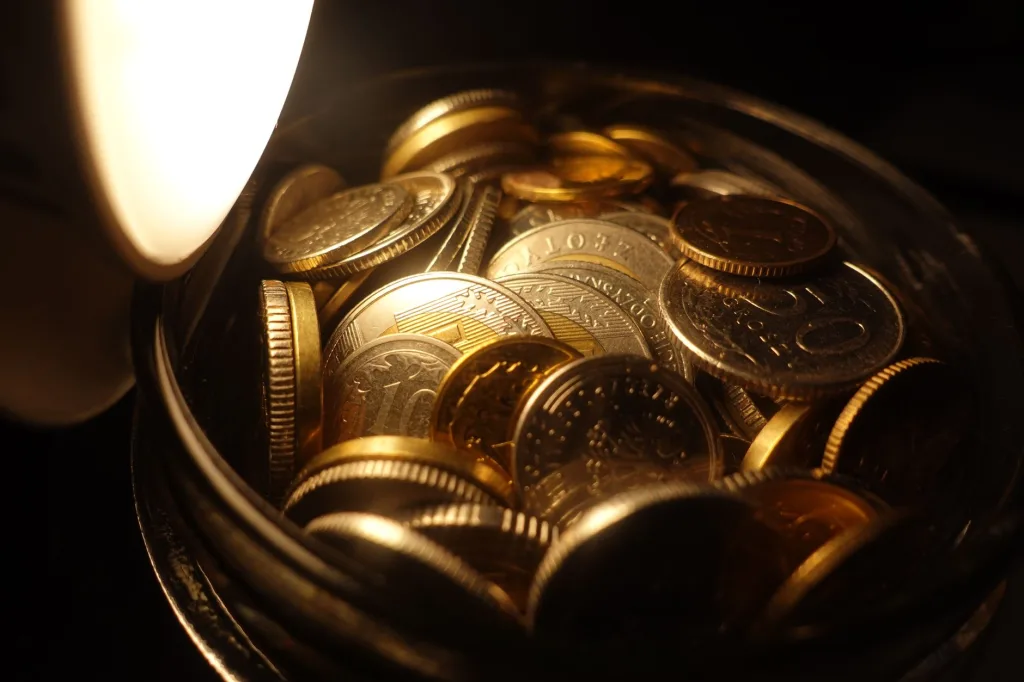
Once you have decided to buy physical investment gold, a second question follows quickly: what size? The same coin series — whether Austrian Philharmonic, Canadian Maple Leaf or American Eagle — is sold from a full ounce down to fractions. The choice is not only about what your budget allows. Weight determines how much you pay per gram, how flexibly you can sell later, and how easily the coin is recognised.
The common weights and what they actually mean
Ounce-denominated gold coins follow the troy ounce (31.1 g). In practice you will see five sizes on the market:
- 1 ounce — 31.1 g, the anchor coin of the series
- 1/2 ounce — 15.55 g
- 1/4 ounce — 7.78 g
- 1/10 ounce — 3.11 g
- 1/25 ounce — 1.24 g, less common
According to the Austrian Mint, the gold Philharmonic is produced in exactly these five sizes, all at 999.9 fineness; the 1/25-ounce coin measures just 13 mm across — smaller than most circulating change. We stock it as the 1/25 oz Philharmonic, and at the other end of the scale the 1 oz Philharmonic.
Premium: why a small coin costs more per gram
The price of a physical coin has two parts: the metal value at the world market price (the LBMA Gold Price is one common reference) and the premium. The premium covers minting, quality control, packaging, shipping, insurance and retail.
Here is the decisive detail: most of those costs arise per coin, not per gram. Striking a 1/10-ounce coin is not ten times cheaper than striking a one-ounce coin — it is only slightly cheaper. Same packaging, same checks, same logistics. The result is a consistent pattern: the smaller the coin, the higher the premium as a percentage of the metal value. Ten 1/10-ounce coins will always cost more in total than one one-ounce coin, even though the gold content is identical.
That does not make small coins a bad purchase. It means you are paying a known price for flexibility — and it is worth knowing that price before you buy rather than after.
What the extra premium buys you
Three things, specifically:
Divisibility. You cannot cut a one-ounce coin in half. If you need part of your position in cash at some point, a single ounce forces you to sell the whole piece. Ten smaller coins let you sell exactly as much as you need.
Buying in steps. Gold has been expensive and volatile through 2026 — World Gold Council data shows the value of bar and coin investment reaching US$44.5bn in the second quarter against US$33.3bn a year earlier, while tonnage held steady at 307 tonnes. In other words, the same quantity of gold costs considerably more. A smaller coin keeps each individual purchase at a manageable size if you prefer to buy regularly in small steps rather than in one large transaction.
Gifts and getting started. A 1/10 oz Philharmonic or a 1/4 oz Maple Leaf is the classic first purchase or birthday gift — the same well-known coin at a lower entry point.
Is a small coin still VAT-exempt?
Yes, provided it meets the definition of investment gold. The EU VAT special scheme for gold sets four conditions for coins: purity of at least 900 thousandths, minted after 1800, legal tender (or formerly legal tender) in the country of origin, and normally sold at a price no more than 80% above the market value of the gold they contain.
Weight itself is not a criterion, so a 1/25-ounce investment coin qualifies too. It is worth noting, though, that the smallest coins sit closest in theory to that 80% ceiling, precisely because their premium is the highest in percentage terms. The rule for bars is different: the required purity is 995, and member states may exclude bars of 1 gram or less from the scheme.
In Estonia investment gold is VAT-exempt, while silver carries the standard 24% rate — one reason buying gold in small amounts behaves quite differently from buying silver in tax terms. We covered that in a separate article.
Resale and liquidity
On the way out, the same logic applies in reverse. Dealers buy and sell all the well-known series, but the bid-ask spread on smaller coins is usually wider in percentage terms — handling, verification and bookkeeping are all per-piece work. If you plan to liquidate a position in one go, a large coin is simpler. If you expect to sell in instalments, or simply do not know the circumstances in which you will sell, small pieces are more convenient.
Either way, one rule holds: stick to well-known, internationally recognised series. An exotic small coin may be beautiful, but selling it on is always harder than selling a Philharmonic or a Maple Leaf.
How to choose — three typical situations
You are buying for the first time and the amount is modest. A 1/10 or 1/4 ounce. You get a recognised coin, you see how buying and storage work in practice, and the extra premium stays small in absolute terms.
You are building a larger position for the long term. One-ounce coins or bars give the lowest premium per gram. The World Gold Council has noted a shift toward smaller products at high prices, but that is affordability at work, not cost efficiency.
You want both. The practical compromise is a mix: most of the weight in one-ounce pieces, a smaller share in 1/10 or 1/4 ounce coins as “loose change”. You avoid overpaying across the whole position while keeping the option to sell in small amounts.
Frequently asked questions
Is a smaller coin a worse investment? The gold itself is identical. What differs is the price you pay per gram and the flexibility you get in return.
How much higher is the premium on a small coin? It depends on the series, the year of issue and market conditions, and it changes constantly — check the actual prices at the moment you buy rather than relying on a general percentage.
Should I mix sizes in one portfolio? It is a common approach, and a sensible one if you can foresee needing to sell in instalments.
Are bars an alternative to small coins? Small bars (10–50 g) are often cheaper per gram than fractional coins, but coins are more widely recognised and carry legal tender status.
If you are unsure which size suits your plan, drop by our shop — we will go through the weights and current prices together.
This article is for informational purposes only and does not constitute investment advice or a solicitation to buy or sell precious metals. Precious metal prices fluctuate. Before making any investment decision, consider your own circumstances and consult a specialist if necessary.
Goldman & Sons editorial team