
Guide · 22/07/2026 · 6 min read
Gold Bars vs Gold Coins: Which Should You Buy?
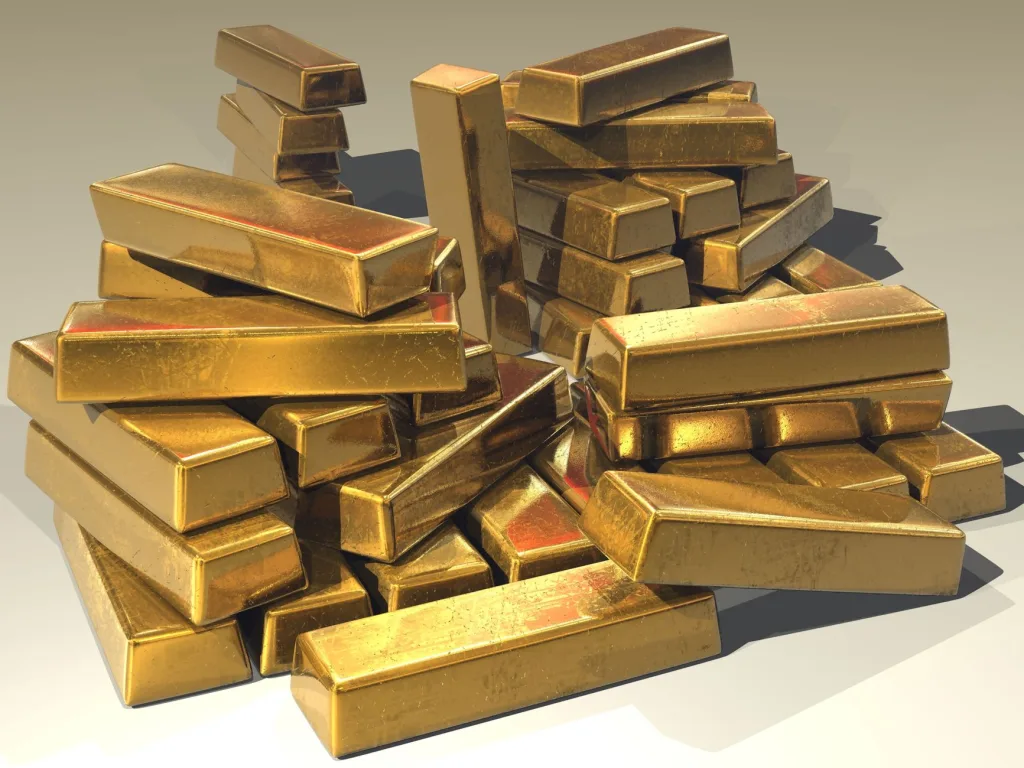
When buying physical investment gold, every beginner eventually reaches the same question: should you buy a gold bar or a gold coin? Both are the same precious metal and both make perfectly sound investments, yet they differ in price, flexibility and how you resell them. This guide compares them honestly, without a sales pitch, so you can decide for yourself which fits your goals.
What is the difference between a gold bar and a gold coin?
A gold bar (also called a bullion bar) is an industrially cast or minted piece of gold whose value comes almost entirely from its gold content. Investment bars are typically 24 carat, i.e. 999.9 fine, and are sold in sizes from one gram up to a kilogram and beyond. Well-known manufacturers include Argor-Heraeus, Valcambi and PAMP.
A gold coin is struck by an official mint, carries a face value and is (or has been) legal tender in its country of origin. The most popular investment coins are the Canadian Maple Leaf, Austrian Philharmonic, South African Krugerrand and American Eagle. Most come in one troy ounce (31.1 g), but fractional sizes are also available: 1/2, 1/4, 1/10 and even 1/25 ounce.
Premium: which is cheaper per gram?
The most tangible difference is the premium — the mark-up you pay over the gold spot price to cover production, handling and margin. As a rule, a simple relationship holds: the larger the piece, the smaller the premium per gram. A large bar is cheaper for the maker to produce than the same amount of gold in small coins, and that shows up in the price.
That is why the per-gram price of a 100 g Argor-Heraeus gold bar, for example, is usually lower than assembling the same weight from one-ounce coins. Coins carry a higher premium because striking them costs more and they come with added collectible and recognisability value. If your only goal is to get as much gold as possible for the smallest mark-up, the scales tip toward larger bars.
Divisibility and flexibility
A lower premium is not the whole picture, though. A large bar’s weakness is divisibility. If you hold a single 100-gram bar and want to sell only part of your holding, you have to give up the whole bar — you cannot sell half a bar. With coins the situation is more flexible: you can sell exactly as many units as you need.
This is precisely where fractional coins like the 1/10 ounce Canadian Maple Leaf and smaller bars such as the 10 g Argor-Heraeus Kinebar gold bar come into play. They cost more per gram, but give you the freedom to buy and sell in small increments. Many investors therefore build a mixed position: a core of larger bars at a lower premium, plus “small change” in smaller coins for flexibility.
Liquidity and recognisability
Liquidity means how easily you can turn an asset back into cash at a fair price. Well-known investment coins are strong here: coins like the 1 oz Canadian Maple Leaf are recognised and bought back by almost any precious-metals dealer in the world. Their purity, weight and origin are standardised, and the mint’s guarantee reduces any suspicion of counterfeiting.
Bars are liquid too, provided they come from a recognised refiner and retain their certificate and original packaging (the assay card). On the wholesale market the “purest” unit is actually the large LBMA London Good Delivery bar, which weighs roughly 400 ounces (~12.5 kg) with a gold content between 350 and 430 ounces. Such bars are the backbone of the precious-metals market, but they are far too large for a retail investor — under the LBMA standards, kilobars and smaller pieces are not accepted on the London wholesale market. In practice this means retail investors trade in smaller bars and coins, where a recognisable brand matters more than a theoretical wholesale standard.
VAT and purity: both can be tax-exempt
Good news for investors in Estonia and across the EU: both bars and coins can qualify as investment gold, whose sale is exempt from VAT. Under the EU special scheme for investment gold, a bar must be at least 995 thousandths fine and of a weight accepted by the bullion markets. For coins the criteria differ slightly: purity of at least 900 thousandths, minted after 1800, having been legal tender in the country of origin, and a selling price that does not exceed the open-market value of the gold content by more than 80%.
In practice this means most well-known investment coins and standard gold bars are VAT-exempt. A coin’s slightly lower purity requirement (the Krugerrand and Eagle, for instance, are 22 carat, i.e. 916.7) does not prevent the exemption — the coin still contains exactly one ounce of pure gold; the added copper alloy simply makes it more durable.
Demand in 2026: what the market shows
Interest in physical gold has been strong lately. According to World Gold Council data, bar and coin demand reached 474 tonnes in the first quarter of 2026 (+42% year on year), the second-highest quarter on record. In Europe, bar and coin demand rose by as much as 50%. This shows that, in a climate of high prices and uncertainty, many investors still prefer tangible metal — whether a bar or a coin.
So which should you choose?
There is no single right answer; the choice depends on your goal:
- Maximum gold for the smallest premium → larger bars (e.g. 100 g or more). A good fit if you invest a larger sum at once and plan to hold for the long term.
- Flexibility and gradual buying/selling → ounce and fractional coins plus smaller bars. You pay more premium, but you can move your holding in parts.
- Maximum recognisability and easy resale → well-known investment coins that any dealer will identify instantly.
For many people a combination makes sense: pair the low premium of a larger bar with the flexibility and liquidity of coins. If you are just starting out, it is worth beginning with smaller, well-known units and growing your position step by step.
Frequently asked questions
Is a bar always cheaper than a coin?
Per gram, usually yes, especially for larger bars. Very small bars (1–10 g), however, can carry a premium comparable to or even higher than coins, because handling them is relatively expensive too.
Is a gold coin safer than a bar?
Safety depends primarily on the maker’s reputation, the certificate and storage, not on the form. A coin from a well-known mint and a bar from a recognised refiner are both trustworthy.
Do I have to pay VAT?
A bar or coin that meets the investment-gold criteria is VAT-exempt in the EU. You can find more detail on Estonia’s tax rules in our separate article on investment gold and VAT.
This article is for informational purposes only and does not constitute investment advice or a solicitation to buy or sell precious metals. Precious metal prices fluctuate. Before making any investment decision, consider your own circumstances and consult a specialist if necessary.
Goldman & Sons editorial team